
HUD & FHA Compliance Upgrades in Spring Hill, FL
Compliance work in Spring Hill comes with a question that doesn't come up as often in other parts of our service area: is the ground stable enough to build the correction on? In most locations, the retrofit scope is straightforward. Fix what the engineer report flagged, get re-inspected, receive the certification. In Hernando County, the karst geology underneath the home can complicate that sequence. A pier correction that looks routine on paper becomes a different conversation when the soil beneath the footing is twelve inches of sand sitting on dissolving limestone.
Murray Mobile Home Services handles HUD and FHA compliance upgrades for manufactured homes throughout Spring Hill. For a detailed breakdown of what each compliance component involves and how the certification process works, see our main HUD and FHA compliance page. This page covers what makes the retrofit process different in Spring Hill's ground conditions.
The Ground Question That Other Markets Don't Have
When we scope a foundation retrofit in Hudson (Pasco County, where we're based), the soil tells a consistent story. Sandy ground, high water table, predictable compaction patterns. The corrections follow logically from the deficiency report, and the ground underneath the corrections is stable enough to support them long term.
Spring Hill adds a variable. The thin topsoil over Hernando County's limestone bedrock means the bearing capacity at each pier location can vary significantly within the footprint of a single home. A footing that needs to be enlarged might be sitting over solid rock at one pier and over a shallow void at the next. This doesn't make compliance work impossible, but it means the scope can shift during the project as we discover what's actually beneath each correction point.
Our Spring Hill foundation repair page covers the karst geology in more detail. For compliance purposes, the practical impact is that we approach Spring Hill retrofits with more investigation at the footing level than we would in a county with uniform soil conditions.
What a Spring Hill Retrofit Typically Requires
The deficiency items that appear on engineer reports in Spring Hill overlap with what we see statewide: anchoring upgrades, pier corrections, skirting replacement, vapor barrier installation, axle removal, drainage grading. The broad compliance page explains each component in detail.
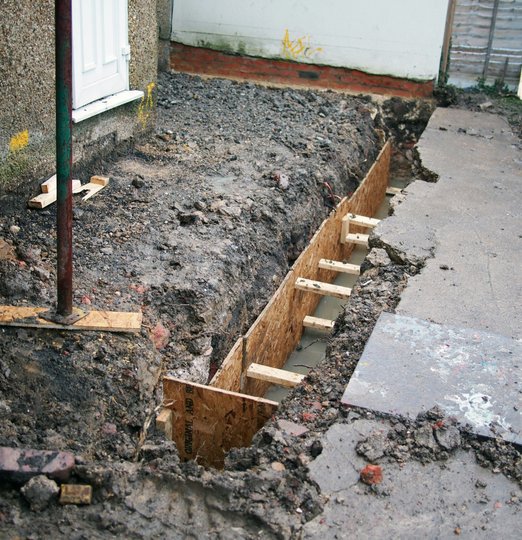
What changes in Spring Hill is the pier and footing work. Elsewhere, resetting a pier means re-stacking blocks on a properly sized footing and confirming the soil will hold. Here, we're checking whether the ground at that location has shifted since the home was installed, whether the limestone beneath the topsoil layer provides adequate support at the depth we're working, and whether the footing size needs to account for a thinner or less stable soil cap than the standard calculation assumes. These aren't complications that arise on every Spring Hill retrofit, but they arise often enough that we factor the possibility into every scope estimate.
Anchoring corrections in Spring Hill follow the same requirements as any Hernando County home in Florida's Wind Zone II. The main local consideration is anchor depth. Auger anchors driven into sandy topsoil over rock behave differently than anchors driven into deep homogeneous sand. The stabilizer plates and drive depth need to match the actual soil profile at the site, not a generic specification.
When the Scope Changes Mid-Project
This is the section that wouldn't need to exist on a Hudson page. In Spring Hill, the correction work occasionally reveals conditions that weren't visible during the initial engineer inspection. A pier footing that looked adequate from surface level turns out to be sitting over ground that's softened or voided beneath the topsoil. A section of the home that the report flagged for minor settling turns out to have a more significant subsurface issue once we start working at footing depth.
When this happens, we stop and reassess before continuing. If the ground at that location can support the correction with an adjusted footing, we adapt the scope and proceed. If the condition suggests something beyond normal soil variation (indicators of active subsidence, for example), we flag it and recommend a geotechnical assessment before completing the work. Pouring a footing over compromised ground doesn't produce a lasting result, and issuing a certification on a foundation that's sitting over an active problem isn't something we're willing to be part of.
This is a judgment call that requires experience in Spring Hill's specific conditions. A contractor unfamiliar with karst terrain might complete the correction as specified on the report without recognizing that the ground beneath it has changed since the inspection.
The Parks Where This Work Comes Up
Windward Village, Forest Glenn, Holiday Springs, Country Acres, and the private lots scattered between US-19 and the Suncoast Parkway all generate compliance work regularly. The 55+ communities in particular see frequent resale activity, and each sale with government-backed financing triggers the certification requirement.
Homes in the parks closer to the Weeki Wachee River corridor tend to have thinner soil cover and wetter ground, which means more pier and footing corrections on average. Parks on higher ground further east tend to have more stable conditions underfoot but may still have anchoring and skirting deficiencies from older installations that predate current standards.
Before You List or After the Report
You can address compliance before listing (assess the foundation, complete corrections, obtain the certification, and list with a clean report already in hand) or after the buyer's lender orders the engineer report (receive the deficiency list and work through corrections on the closing timeline). Both approaches work. The first removes risk from the transaction. The second is more common because most sellers don't think about foundation compliance until the lender raises it.
If you're an agent working a Spring Hill manufactured home transaction and the compliance work is the bottleneck, call us with the engineer report. We'll scope it and tell you what the timeline looks like. If you're a seller preparing to list and want to know what a lender is likely to require, reach out and we'll assess the home before the transaction begins.
We handle the same retrofit process for HUD and FHA compliance work in Shady Hills, where the ground conditions driving deficiencies are different from Spring Hill's karst but no less common.
Start Your Compliance Project